
LITTLE ROCK – Following across-the-board gains in academic proficiency on the end-of-year Arkansas Teaching, Learning, and Assessment System (ATLAS) announced in June, the Arkansas Department of Education last week released results showing an increase of 23 more school districts receiving either and A or a B over last year, and 12 fewer districts receiving a D or F.
This is the second year letter grades for schools and districts have been based on ATLAS scores, which reflect not only student proficiency but also growth across the whole student body, and particularly among students who scored in the lowest levels of achievement the prior year.
“When students work hard and teachers have the tools and support they need, real progress follows—and that is exactly what we are seeing across Arkansas,” said Emmy Henley, managing director of education nonprofit The Reform Alliance. “Rising ATLAS scores and improving school grades are more than numbers; they represent children learning, teachers succeeding and schools growing stronger. The progress since Arkansas LEARNS began in 2023 is clear: the initiative is working.”
Arkansas LEARNS includes the LEARNS Act itself, which made unprecedented investments in education, as well as efforts to align testing and standards in Arkansas public schools through ATLAS so test data reflects what students actually learn and master, and instruction can be provided to meet any missing needs.
“This clearer, more consistent system gives parents a better picture of how well students are learning and how much progress schools are making,” Henley said. “That transparency matters because families now have more public education choices than ever. Parents can choose another school within their district, transfer to a different district or consider a public charter school—all without leaving the public education system.
“School letter grades shouldn’t be the only factor in determining whether a school can meet a particular child’s needs, but they can help inform that evaluation,” she said.
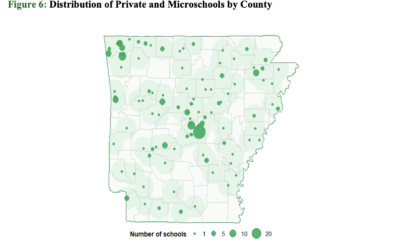
To help families who may be residentially assigned to a D or F public school better understand their options geographically, The Reform Alliance created a map showing D and F schools along with other nearby options, including private and nontraditional schools, noting those that participate in private choice programs. The map, which will be updated with this year’s results, can be found here or by visiting https://thereformalliance.org/school-options/.