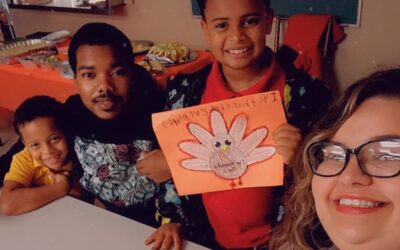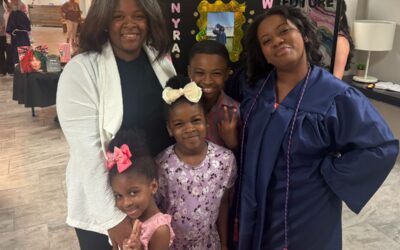
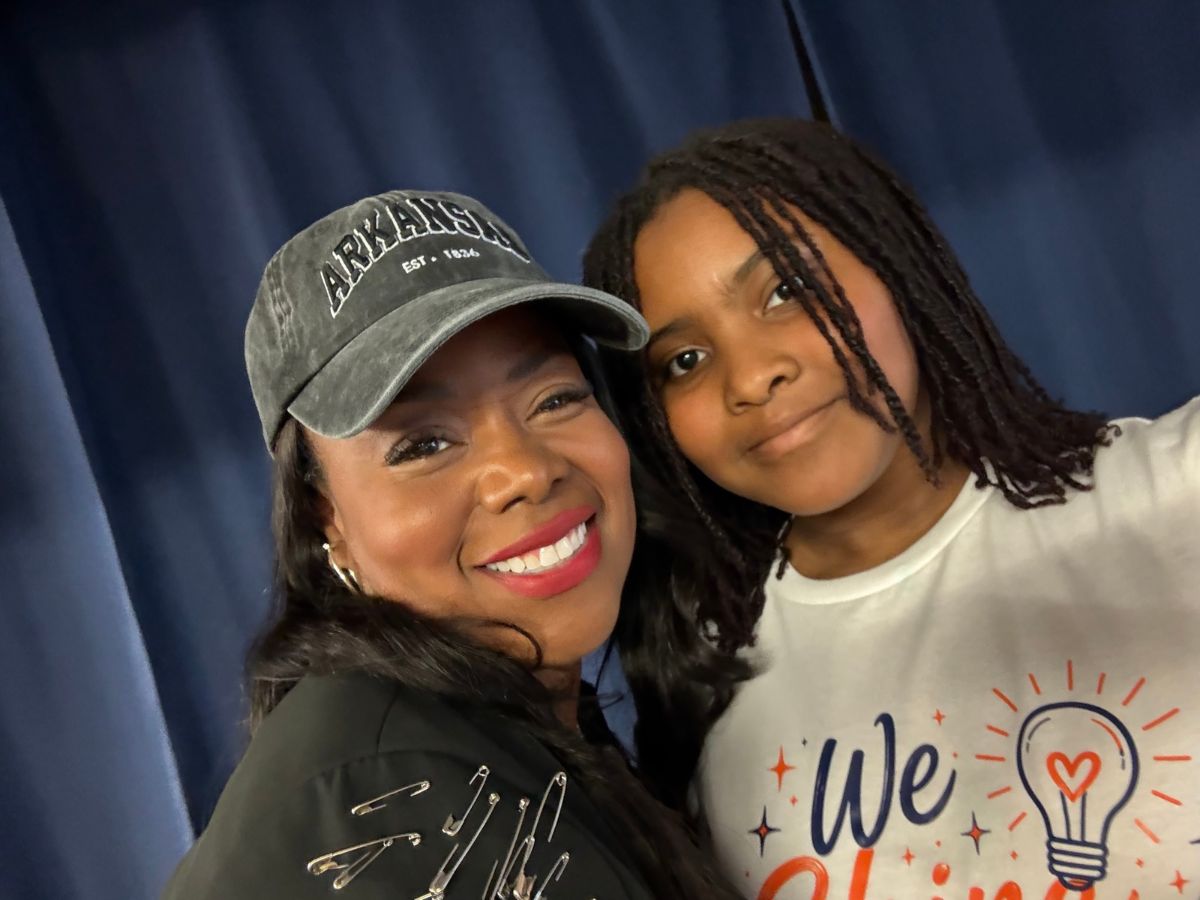
Educator and mother Rebecca Newby expects great things from her daughter Jada – and from Jada’s school.
“People should pay attention to what’s happening at the Learning Lounge,” Newby said of the Pine Bluff school, which has grown from a tutoring support service to a microschool to an accredited private school. “Because the children who attend this school and the families who are a part of this community and the leader who is blazing a trail here are nowhere near done yet.”
Unlike many parents, Nearby said that, as an educator, microschools have been on her radar for nearly a decade, since before they gained so much attention during the COVID-19 pandemic. Just after the pandemic, she transitioned from learning to teaching and met her instructional facilitator, Kanesha Adams, who would go on to found the Learning Lounge.
“She was able to go beyond the school system and started exploring education through the lens of entrepreneurship, and she has truly been a trailblazer in our community the entire time. I’ve stayed connected with it, and I just love the work that she does,” Newby said.
That work has included serving Newby’s daughter Jada for three years now. Because being a teacher’s kid isn’t always easy.
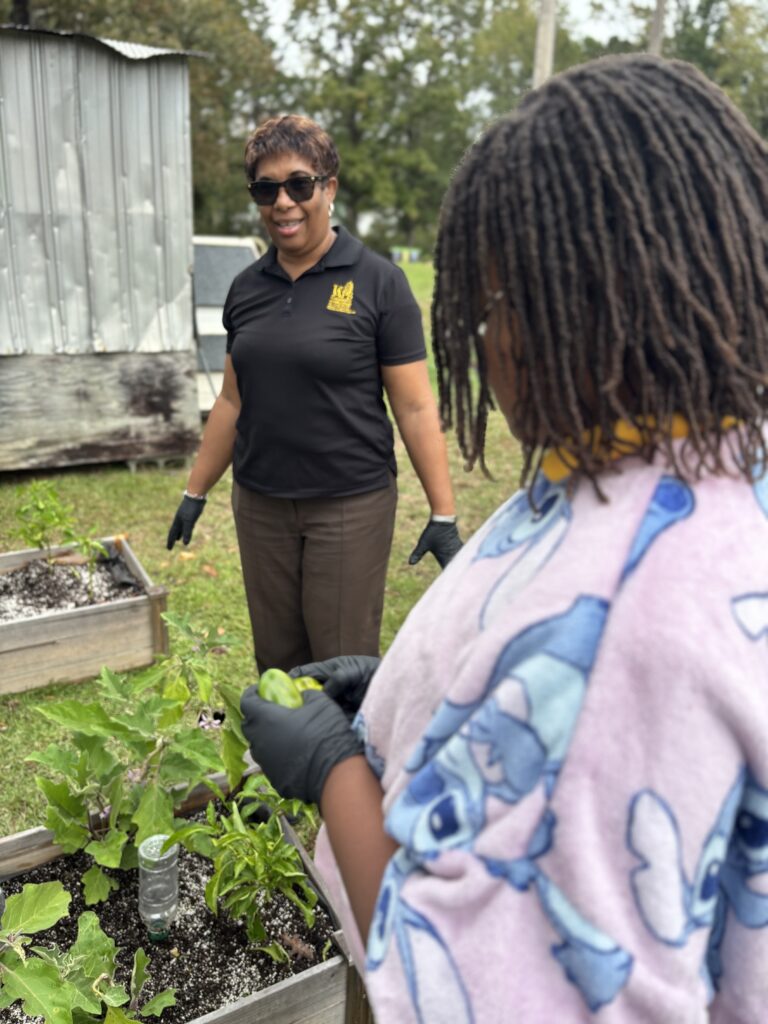
“My daughter was really seeking a sense of … her own identity. She didn’t just want to be ‘Ms. Newby’s daughter’ anymore. She wanted to feel like Jada again,” Rebecca Newby said. “And Jada was able to come here and be in a smaller classroom and be in a different learning environment that is not as traditional and learn to just enjoy being herself. I truly feel like she was being seen as an individual, and she was getting exactly what she needed.”
For her part, Jada, now in sixth grade, agreed.
“It just feels like a safer space rather than being in the big schools. I really like it because the teachers try to accommodate every single thing we need, and they do a really good job with that,” Jada said. “They make sure we’re comfortable. They check in on us. They ask what we need or want.”
That kind of individual attention is often the hallmark of microschools and the way they serve students. But it’s also important to understand how microschools can serve a community.
“What it’s doing for the community is caring for our kids in a way that large-scale systems have never been able to do before,” Newby said. “Microschools are able to serve from a need-based, community-based, family-based angle.”
And that example has tremendous power, whether microschools serve a small rural community or a larger urban one. Pine Bluff, as a community, has lost population and industry over the last few decades. But it has not lost a sense of community pride or locals who want to invest in it.
“Kanesha Adams is showing, through the Learning Lounge, that we can be the change that we want to see in our community,” Newby said. “It doesn’t take outsiders from other states to come in and think they’re going to offer solutions when the people who are already in our communities know the needs, know the place. When they feel secure enough to build up the community together, that’s where the magic really happens.”
So, as her daughter’s school retains its microschool spirit though no longer technically classified as one, Newby is big on microschools and what they can offer.
“I think microschools are going to continue to grow, and I’m excited to see the way we’re able to meet families and communities and people where they are,” she said. “Because education is the most powerful tool that we can use to change the world.”
But, to remain in operation, these small, individually focused schools generally require tuition. Understandable, but that doesn’t make them unreachable when public programs offer financial support so students can attend, regardless of family financial circumstances.
“We’re blessed that we have schools like the Learning Lounge that can be another option for families,” she said. “I say it’s not an achievement gap in the world; it’s an opportunity gap. It’s an access gap.
“One of my favorite quotes is by Tupac Shakur; it says ‘if there ain’t no hope for the youth, there ain’t no hope for the future.’” Newby said. “I would call microschools pockets of hope for communities beyond ours – communities where people are seeking safer spaces, seeking spaces where individual voices feel valued. Because at the end of the day, in less than 10 years, many of these students will become our leaders.”