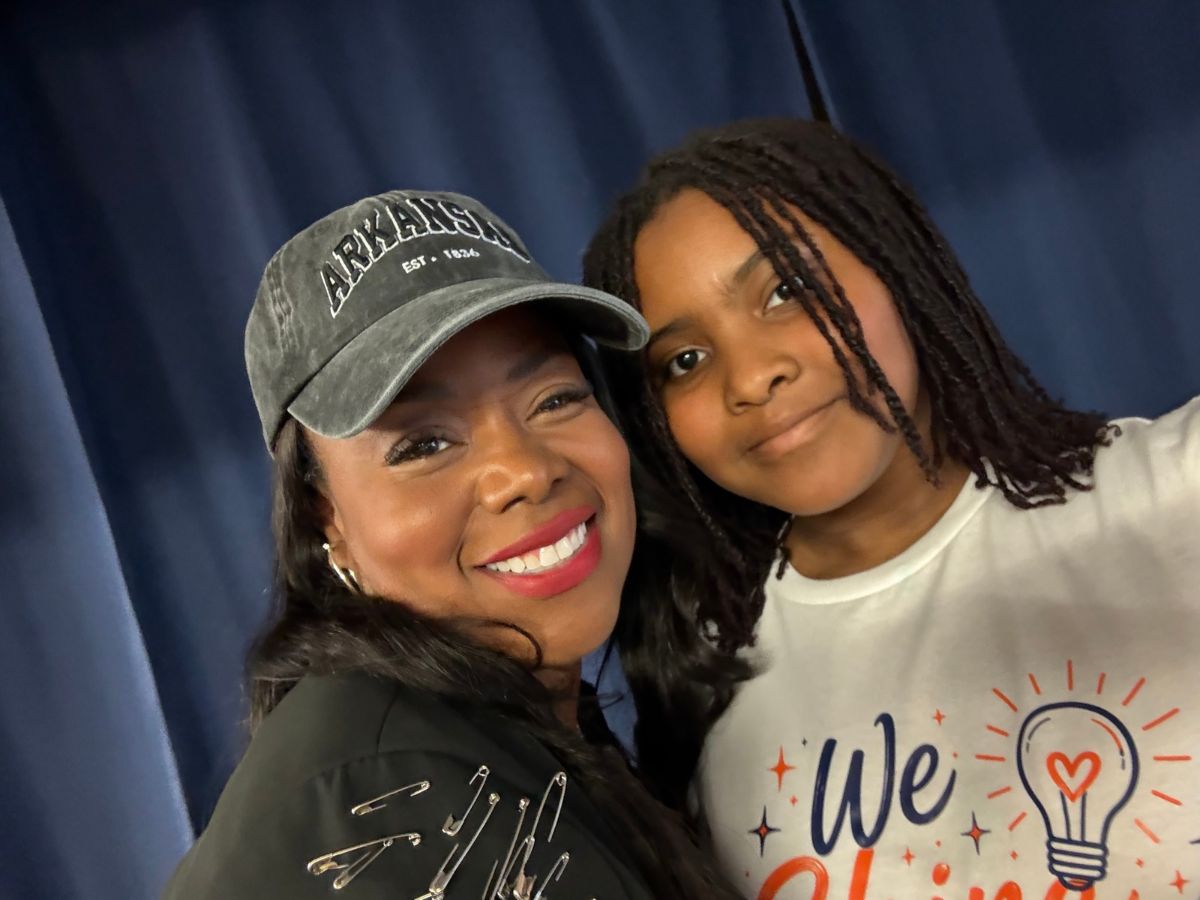
Anxiety can be the enemy of learning. So Natasha Fowler of Jonesboro was herself worried when she saw her son growing increasingly anxious about the transition from pre-K to kindergarten.
“When he went to preschool, in his last year before kindergarten, he cried at night going to sleep, dreading going to school, having anxiety about it. He didn’t know it was anxiety. I knew it was anxiety. He would ask me, ‘Mama, how did you get through going to school? How did you do it?’ And school wasn’t a problem for me. So I didn’t have the same experiences he was having, but it was very real for him,” she said. “That’s very hard on a parent.”
The plan had been to attend public school. Fowler, who works in behavioral health, was working for a public school at the time. The convenience of transportation, plus being close by if needed, was so very appealing.
“But it just wasn’t a fit for him. Some people just don’t understand, but public school is not a fit for every kid. He would not have enjoyed it. It would have been like pulling teeth,” she said. “And my main goal was for him to enjoy school.
“I was trying to explore all the options available within the community that I could reasonably drive to. I was willing to rearrange my schedule to find whatever was gonna be the best fit for him.”
And that wasn’t easy. As an only child who stayed at home rather than go to daycare during the COVID-19 pandemic, her son had grown into a sensitive and kindhearted kid. But Fowler knew he needed more attention and some flexibility.

“He just needed some one-on-one to be able to feel safe. He needed some flexibility so that if he needed to do something different or he needed an accommodation, there would be freedom to do that without having to go through a procedure or a policy.”
What she found, through coworker, was Bright Learners Academy and its founder Cheyenne Luster, who built a microschool based on the idea of meeting kids where they are and letting them have fun while learning.
“I like the fact that Cheyenne told me, for him, if he does really well in one subject, he can go faster. And if another subject, he needs more time, he can go slower,” Fowler said. “In kindergarten, his math tested way above grade level, so he’s moving beyond that. And I like that it can be just a little more individually centered.”
She’s also come to appreciate the more casual and personal – even familial – contact and communication with the school.
“I have access to Cheyenne. I can text her. I can say, you know what, his dad is picking him up today, or this different person is picking him up today. We’re running late today. He has a doctor’s appointment. I don’t have to have a doctor’s note. I can just communicate, and it’s okay,” she said. “There’s flexibility. If I need to pick him up early, I can just send a message and say, ‘Hey, I need to pick him up at one o’clock today. “We have an appointment.’ And I just come in, and it’s very easy for me as a mom, trying to juggle working and all of the responsibilities of a parent.”
That same closeness applies to teachers knowing their students.
“I know all teachers care for their kids, but I know that the teachers here have the time to really get to know my kid. And I know that my kid feels it. He feels cared for. And that makes a huge difference in his educational experience.”
So important was that difference that, Fowler said, in order to make it work, she had to change her work and her work schedule. She rebuilt her life around it.
“It was a scary notion because, you know, some people thought it would be much easier, more predictable for him to go to public school. And in some ways it would have. And I think that he would have adjusted eventually. But with my background in behavioral health, I was fearful that it was gonna plant some seeds of more anxiety and more avoidance of school.
“But I knew I’d made the right choice pretty soon in. One day, when I picked him up from school, he wanted to stay on the playground. He asked if he could stay, if I would go to the playground with him. Luckily, it’s a place that is forgiving about some of the boundaries and norms. So I was able to just go with him after school and play. And it became a very familiar environment for him.”
But accessing such an educational environment is not without cost. Fowler, who couldn’t afford to give up work to homeschool, said the Arkansas Education Freedom Account (EFA) program has made microschool a realistic alternative.
“I cannot afford to homeschool. I need to work, and I cannot afford private school,” she said. “So if the EFA was not an option, or if it ever becomes not an option, it’s going to be a very difficult decision-making process.
“I feel very fortunate that my son is at this age in this time. EFA funds didn’t exist a few years ago, and there weren’t as many options then. There are people who live in more rural areas that don’t have these options. I’m very fortunate that we just happen to be in an area that we do,” she said. ”But I’m very thankful that more places like this are popping up and that there are more opportunities for parents to have options for their children – parents who want a more homeschool-like environment but can’t afford not to work can still provide that for their kids. I feel very fortunate in our location and in this time to have the EFA funds to be able to do it.
“When we went to Bright Learners, my son had tears the very first day but never again. And that’s how I knew it was a good fit.”
Watch her tell her story here: